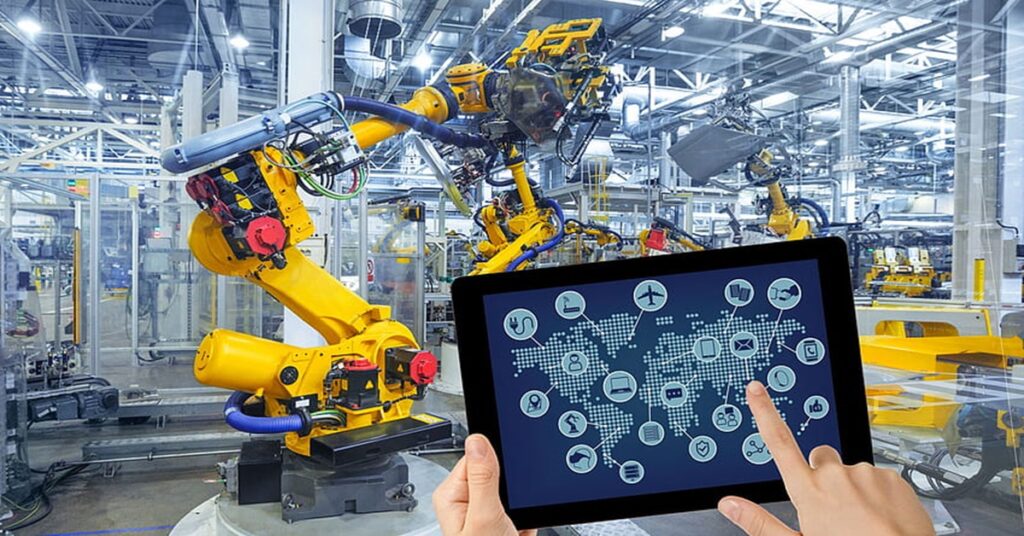

The Future of Smart Manufacturing
The manufacturing industry is undergoing a rapid digital transformation. As factories embrace Industry 4.0 technologies, wireless industrial automation has emerged as a game-changing solution for improving productivity, reducing downtime, and enhancing workplace safety.
Traditional manufacturing systems often rely on complex control cables and fixed communication networks. While these systems have served industries for decades, they can create maintenance challenges, limit operational flexibility, and increase production interruptions.
Wireless automation technologies are changing this landscape by enabling real-time communication between machines, operators, and control systems without the limitations of conventional wiring.
What is Wireless Industrial Automation?
Wireless industrial automation refers to the use of wireless communication technologies to monitor, control, and optimize manufacturing processes. These systems allow machines, sensors, robots, and operators to communicate seamlessly across the production floor.
Modern wireless automation solutions are commonly used in:
- Automotive manufacturing
- Robotics and automation cells
- Assembly lines
- Packaging industries
- Material handling systems
- Smart factories
- Industrial IoT (IIoT) environments
By eliminating unnecessary cables and simplifying communication, manufacturers can create more flexible and efficient production systems.
Key Benefits of Wireless Automation Systems
1. Reduced Production Downtime
Unexpected machine stoppages can cost manufacturers thousands of dollars per hour. Wireless automation solutions help minimize downtime by enabling faster diagnostics and reducing cable-related failures.
Benefits include:
- Real-time machine monitoring
- Faster fault detection
- Reduced control cable breakdowns
- Predictive maintenance capabilities
2. Improved Worker Safety
Industrial accidents often occur due to communication failures, delayed emergency responses, or unsafe machine interactions.
Wireless safety systems provide:
- Emergency stop integration
- Instant machine status updates
- Enhanced operator communication
- Improved hazard detection
These technologies help create safer workplaces while supporting compliance with industrial safety standards.
3. Increased Manufacturing Flexibility
Modern production environments require rapid changes to accommodate new products and customer demands.
Wireless automation allows manufacturers to:
- Reconfigure production lines quickly
- Relocate machines without extensive rewiring
- Scale operations efficiently
- Support flexible manufacturing systems
4. Enhanced Productivity and Cycle Time
Manufacturers are constantly searching for ways to increase throughput without increasing operational costs.
Wireless automation contributes to:
- Faster machine coordination
- Reduced operator movement
- Better production visibility
- Improved overall equipment effectiveness (OEE)
The Role of Industry 4.0 and Industrial IoT
Industry 4.0 technologies are reshaping factories through connected devices, smart sensors, artificial intelligence, and data-driven decision-making.
Wireless automation serves as a critical foundation for:
- Industrial Internet of Things (IIoT)
- Smart manufacturing
- Digital transformation initiatives
- Predictive maintenance programs
- Real-time analytics dashboards
Companies implementing wireless automation gain access to actionable data that helps optimize production performance and reduce operational inefficiencies.
Emerging Wireless Automation Trends in 2026
Smart Factory Integration
Factories are increasingly integrating wireless devices with cloud-based monitoring platforms to improve visibility across production operations.
AI-Powered Predictive Maintenance
Artificial intelligence can analyze machine performance data and identify potential failures before they occur.
Collaborative Robotics (Cobots)
Wireless communication allows robots and operators to work together more safely and efficiently.
Real-Time Asset Tracking
Manufacturers are using wireless technologies to monitor tools, equipment, and materials throughout the production process.
Industrial Edge Computing
Edge computing enables faster processing of manufacturing data directly on the factory floor, reducing latency and improving response times.
Why Manufacturers Are Investing in Wireless Automation
Manufacturing leaders are under pressure to improve efficiency, reduce costs, and maintain high-quality production standards.
Wireless automation helps organizations achieve:
- Lower maintenance costs
- Higher equipment reliability
- Faster production cycles
- Improved workplace safety
- Greater operational flexibility
- Better return on investment (ROI)
As global competition increases, companies that adopt smart manufacturing technologies gain a significant advantage over those relying on outdated systems.
Wireless industrial automation is no longer a future concept—it is a necessity for modern manufacturing. Companies adopting wireless communication, industrial safety systems, and smart automation technologies are achieving higher productivity, improved flexibility, and safer work environments.
Whether you are upgrading an existing manufacturing facility or planning a smart factory transformation, investing in wireless automation can help future-proof your operations and position your business for long-term success in the industry 4.0 era.
Ready to modernize your manufacturing process? Explore advanced wireless automation and industrial robotics solutions to reduce downtime, improve safety, and maximize operational efficiency.